Officials blame a telecom outage at the centers that run high-altitude traffic and say there’s no sign of an attack. Travelers, airlines and insurers are bracing for a messy weekend.
Officials blame a telecom outage at the centers that run high-altitude traffic and say there's no sign of an attack. Airline passengers, airlines and insurers are bracing for a messy weekend.
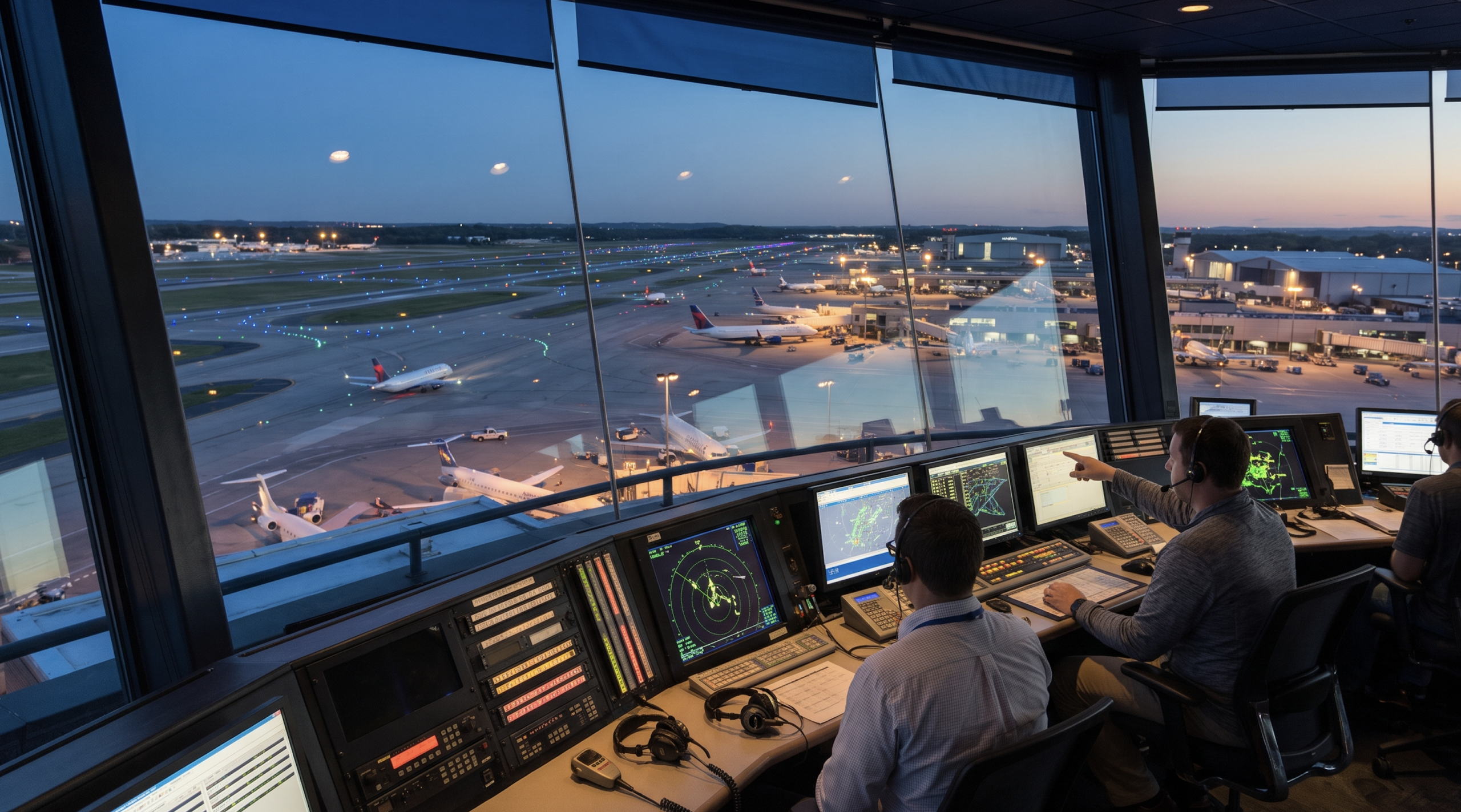
The FAA has halted every departing flight in the US on Friday afternoon after a cyber event hit the centers that guide aircraft between cities. It is only the third nationwide stop in a quarter century.
The order took effect shortly before 4 p.m.
ET. Planes taxiing for takeoff were turned back to their gates and passengers were taken off aircraft, according to traveler accounts reported by The Wall Street Journal. Others, including Insurance Business staff are being held on the tarmac in Canada. Some crews warned the wait could last hours.
Other passengers were stuck on board because the gates had already filled up.
Transportation Secretary Sean Duffy said on social media that the communication issue was affecting all of the Air Route Traffic Control Centers. The FAA's own statement described problems at "multiple" centers. These centers manage high-altitude traffic across large parts of the country. Homeland Security Secretary Markwayne Mullin told reporters at the White House there was no sign so far of a "nefarious attack." He said officials weren't ruling anything out, including a cyberattack, and that this was not "another 9/11."
## What we know so far
Cause: The FAA has attributed the halt to a temporary telecommunications outage.
Two FAA employees told the Washington Examiner it was a "rolling frequency outage" at facilities that monitor aircraft in flight.
Radios or radar: The Journal reported it wasn't clear whether only the radios controllers use to talk to pilots were down, or also the radar used to keep planes apart. An internal Alaska Airlines message seen by CNBC referred to both communications and radar problems.
Microsoft: Mullin said the outage was not connected to the massive global Microsoft outage the day before.
Flights in the air: Aircraft already airborne could continue to their destinations. Inbound international flights were handled case by case.
What we don't know yet: the root cause, why backup systems didn't keep traffic moving, and when normal schedules will return.
## A Friday afternoon pileup
The trouble started small and spread. Shortly before the nationwide order, Chicago's O'Hare and Midway airports were placed under a ground stop for an equipment outage.
Aviation reporting suggests Kansas City Center went into a ground stop around 3:30 p.m. over intermittent equipment outages, before the problem spread to other centers. The FAA has not confirmed that sequence.
By 5 p.m. ET, FlightAware was counting more than 9,000 delayed US flights and more than 440 cancellations, according to the Journal. The FAA pushed the expected end of the stop to 11:30 p.m.
ET.
The airlines warned of a long night. American told customers to expect disruption for the rest of the day and promised an "all hands on deck" effort once the FAA lifts the stop. United said it would work to get customers to their destinations once the issue was resolved.
Some travelers gave up on flying altogether. John Sturino, a drummer from Brooklyn, told the Journal he spent half an hour in line at a Delta lounge desk at LaGuardia to cancel his flight and get a refund.
He will now miss a percussion convention in Indianapolis. "It wasn't worth staying in the airport," he said.
The real cost may come after departures restart. Disruptions tend to snowball as stops drag on, because flight crews run up against their maximum duty hours. The stop also hit a busy Friday afternoon less than two weeks before Thanksgiving.
## A system with a growing outage record
Before Friday, the FAA had halted all departures nationwide only twice. The first was after the September 11 attacks.
The second was in January 2023, when the FAA's Notice to Air Missions system failed. That stop lasted between about 90 minutes and two hours, depending on the account, and the Journal reported it contributed to more than 1,000 cancellations.
Smaller failures have become more common in the meantime. Radio and radar outages have hit FAA facilities repeatedly in recent years. Earlier this year, New York-area flights were halted after a contractor accidentally cut a fiber line in New Jersey.
Outages around Dallas, the Upper Midwest and New York were mostly contained, the Journal noted. Friday's was not. Aviation safety expert Steve Arroyo told KCRA it resembled a regional outage in September that snarled hundreds of Northeast flights, only this time nationwide.
Read next: Microsoft email, teams goes out globally puts cloud concentration risk back on brokers' radar
## Travel insurance: the clock and the cancel button
For agents who sell travel cover, two details will decide most claims: how long the client was stuck and what they did next.
Trip delay benefits generally pay for meals and lodging once a delay passes a set number of hours and stems from a covered reason. Some plans exclude delays under six hours.
A two-hour wait may produce nothing. An overnight cancellation is different. Earlier FAA stops show how carriers have treated this kind of event.
Sturino's case shows the other side of the problem. A traveler who misses a prepaid event, such as a convention, a cruise or a wedding, may look to trip interruption or cancellation benefits.
Whether those pay depends on the reason for missing the event and on whether the airline's own refund already covers the fare.
Travelers shouldn't count on much from airlines. A failure in federal air traffic control isn't an airline-caused delay, so carriers' voluntary meal and hotel commitments may not apply. Federal rules are also about to shift more delay costs onto passengers. The DOT has finalized a rule taking 10 more delay causes outside airlines' control.
It now takes effect February 1, 2027, and the DOT expects the value of amenities airlines provide to fall.
Demand for cover was already rising. Squaremouth reported insured trips up 12.9% year on year in the third quarter of 2026, with an average trip cost above $7,400. Friday gives advisors a concrete example as clients book holiday travel, when delay claims typically spike.
Read next:DOT takes airlines off the hook for 10 delay causes - and travel insurance fills the gap
## Commercial clients face a coverage gap
For business clients, the picture is worse. Freight forwarders, perishables shippers, event organizers and companies with staff stranded on the road all lost money on Friday.
Most will find their property business interruption cover silent, because it typically needs physical loss or damage. Contingent BI usually needs damage at a supplier. A telecom failure inside a federal air navigation system involves neither.
Cyber cover is an awkward fit too. Its system failure and dependent BI triggers usually focus on the insured's own systems or IT vendors, not a government network.
Event cancellation or parametric flight delay products may respond, depending on how their triggers are written.
This was also the second large outage in two days. After a run of cloud failures in late 2025, Lockton warned that cloud outages were putting cyber coverage under new pressure. It urged buyers to make sure their policy language addresses cloud outages and other systemic exposures. Friday showed the point reaches well beyond the cloud.
Shared infrastructure can stop whole industries without damaging anything physical, which is why insurers warn that systemic risk is outpacing readiness.
What brokers should do this weekend:
Travel clients: tell them to keep receipts, airline delay or cancellation notices and flight-status screenshots, and not to cancel prepaid plans before checking their policy.
Policy terms: review delay thresholds, interruption terms and daily limits on travel policies you've placed.
Commercial accounts: flag air-dependent clients with no non-damage BI trigger.
Gap cover: consider event cancellation or parametric delay cover where losses fall outside BI wordings.
Read next:Cloud outages put cyber coverage under new pressure - Lockton
_This story will be updated. Airline passengers can track airport conditions on theFAA's NAS status page and individual flights on FlightAware._
Free newsletter
We'll keep you up-to-date with the latest breaking news, cutting edge opinion, and expert analysis affecting both your business and the industry as whole.
Disclaimer: This story is auto-aggregated by a computer program and has not been created or edited by Finopulse.
Publisher: Source link