In our last issue, we talked about how Elon Musk’s companies are becoming essential infrastructure for the U.S. government.
But that’s not the only infrastructure play he’s making.
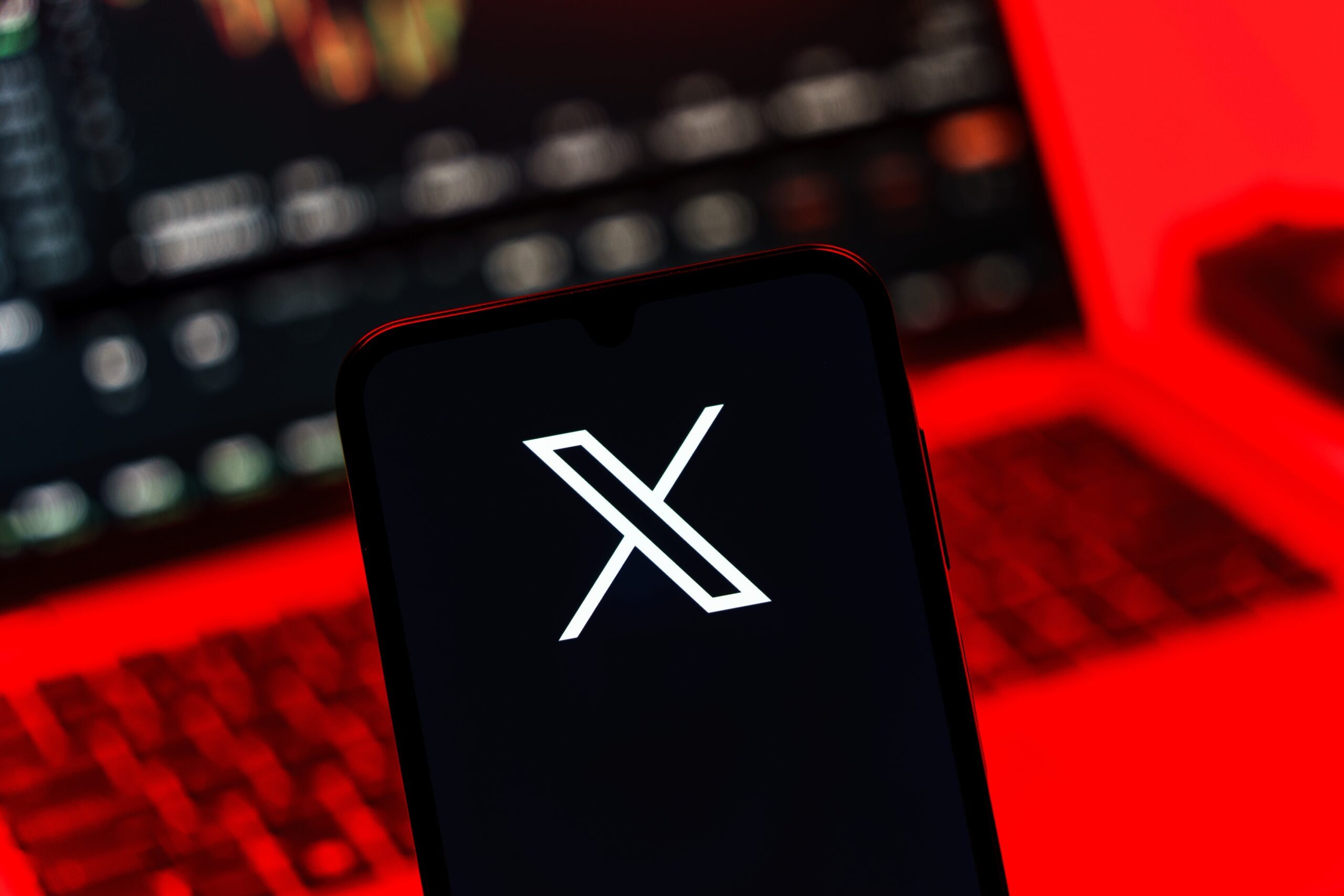
When Musk acquired Twitter — now X — a lot of people were confused by the move. Some saw it as a vanity purchase or a way for him to wield a political megaphone. Very few saw it as a long-term business strategy.
But I did.
From the beginning, this never looked like a social media play to me. Musk wasn’t buying a platform just so he could post memes more efficiently.
He was buying the foundation for something much bigger.
You see, in much of the world, the most powerful apps aren’t just places to talk.
They’re places to pay, transact, work and live digitally. China figured this out years ago with WeChat, which evolved from a messaging app into the backbone of everyday commerce.
Musk has been clear about wanting to build something similar in the West.
And over the past few weeks, the clearest evidence yet of this plan has started to surface.
X’s Financial Layer
A year ago, X took its first concrete step toward becoming much more than a social platform.
Last January, the company announced a partnership with Visa to power X Money, a digital wallet and real-time payments system built into the X app.
The integration will let users fund an in-app wallet, send and receive peer-to-peer payments and transfer money instantly between the wallet and bank accounts.
And you’ll be able to do all of this without leaving the platform.
At the time, X CEO Linda Yaccarino called the deal the first of many big announcements tied to X Money’s rollout later in 2025. She also explicitly linked it to the broader goal of turning X into an “everything app.”
Yet we’ve barely heard anything about it since.
That changed recently when Musk confirmed that X Money is already live internally, with employees and early users using the system ahead of any public launch.
This tells you roughly where the project stands today.
Payment systems don’t reach internal use until the hard parts are mostly finished. Licensing, compliance and bank relationships usually come first.
Those steps are slow and regulated, so they tend to happen well before anything is turned on publicly.
Over the past year, X Payments LLC has secured money-transmitter licenses in more than 40 U.S. states. Each license comes with capital requirements, bonding, audits and ongoing reporting.
Companies don’t build that kind of footprint unless they expect significant transaction volume. And by integrating with Visa Direct, X is plugging into the same settlement rails used across the payments industry.
This could mean big business for a platform that has struggled to become profitable.
Globally, digital payment volumes now run into the tens of trillions of dollars each year. Industry estimates put total digital payment transactions above $10 trillion in 2024, with steady growth projected as cash use declines and online commerce expands.
The U.S. accounts for a large share of that flow, driven by peer-to-peer payments, digital wallets, subscriptions and online transactions.
For X, this is a meaningful opportunity.
The platform doesn’t need to become a bank to benefit from payments. It just needs to sit in the flow and collect its share.
Because until now, most of the economic value created on X hasn’t stayed there. Advertising dollars flow to outside systems and payments happen off-platform.
X Money changes that by keeping more of those transactions inside the app.
Once people are able to pay, tip and subscribe in one place, they’ll likely use that place more. Over time, it will make the app stop feeling optional for these folks.
That’s when X will start behaving more like infrastructure.
Just like what happened with WeChat.
Except X is entering this phase with an advantage that earlier platforms didn’t have.
It controls its own AI. Because Grok is already built directly into the X app.
In payments, AI plays practical roles that are already standard across financial services. Things like fraud detection, transaction monitoring, customer support and creator assistance.
X doesn’t have to invent those functions because they’ll be embedded from the start.
And I believe it’s all part of Musk’s bigger plan.
Here’s My Take
In a vacuum, X Money just looks like a payments product.
But when it’s placed alongside Musk’s other businesses, it looks more like a missing layer.
SpaceX gives Musk an edge with defense and logistics. Starlink handles communications.
And Tesla — a stock I re-ecommended to Strategic Fortunes readers in June 2024 after taking a combined 735% gain on our previous position — operates at the intersection of manufacturing and energy.
Now, xAI is moving into enterprise and government workflows. And soon, X Money will handle value transfer.
When you look at the big picture, all of Musk’s businesses reinforce each other in practical ways. They generate data, data improves intelligence, and that intelligence helps embed Musk’s companies deeply into key institutions, where they become hard to replace.
Now he’s adding a transaction layer designed to produce steady cash flow.
Of course, X Money won’t turn X into an “everything app” overnight.
But once money starts moving through the platform, X will stop being just a social network. It will become a place where optional services start turning into infrastructure.
And if that sounds familiar, it should.
We’ve already seen how this story plays out in his other businesses.
Regards,
Ian King
Chief Strategist, Banyan Hill Publishing
Editor’s Note: We’d love to hear from you!
If you want to share your thoughts or suggestions about the Daily Disruptor, or if there are any specific topics you’d like us to cover, just send an email to [email protected].
Don’t worry, we won’t reveal your full name in the event we publish a response.
So feel free to comment away!
Disclaimer: This story is auto-aggregated by a computer program and has not been created or edited by finopulse.
Publisher: Source link